Nach über einem Jahr Pandemie sind sie nun seit dem 24.02.2021 überall in Deutschland bekannt: Die Antigen-Selbsttests für jedermann und zu Hause, um eine Infektion mit SARS-CoV-2 zu erkennen. Für alle Tests gibt es jedoch Grundlegendes, was man beachten muss. Jeder Test hat ein MHD, das nicht überschritten werden darf. Wie bei Lebensmittel, gilt hier auch, dass geöffnete Verpackungen nicht genutzt werden dürfen, vor allem wenn die eingeschweißte Testkassette nicht mehr versiegelt ist.
Was macht ein SARS-CoV-2 | Corona-Selbsttest Test?
Egal, ob Selbsttest oder Profitest, bei den SARS-CoV-2 Tests geht es darum, Virusmaterial nachzuweisen, insbesondere Virusbestandteile. Bei den PCR-Tests (Profitest) wird sogar das Erbgut des Virus erkannt. Die Selbsttests müssen natürlich so einfach in der Anwendung sein, dass auch ein Laie ohne Probleme eine Probenentnahme durchführen und ohne medizinische Vorkenntnisse das Ergebnis ablesen kann.
Hinweis: Viele der Antigen-Schnelltest funktionieren ähnlich einfach wie ein Schwangerschaftstest.
Welche Testmethoden für SARS-CoV-2 | Corona-Selbsttest gibt es?
Zurzeit sind in Deutschland zwei Arten von Testmethoden genehmigt. Einerseits die Nasen-Rachen-Abstrich-Methode und andererseits die Speichel-Spuck-Methode. Vorteil bei der Nasen-Rachen-Abstrich-Methode ist, dass sich im Rachenschleim am sichersten Virusmaterial befindet, sofern man infiziert ist.
- SARS-CoV-2 Nasenabstrich (Profi- & Selbsttest)
Mittels eines dünnen Wattestäbchens wird der Testperson Probematerial aus dem Nasen-Rachen-Bereich entnommen. Bei den Profitests über den Rachen und den tiefen Nasenbereich, bei den Selbsttest aus dem vorderen Nasenbereich. - SARS-CoV-2 Spucktest (Selbsttest)
Mittels des Speichels, der in ein Röhrchen gespuckt wird, kann das Virus nachgewiesen werden. - SARS-CoV-2 Gurgeltest (Selbsttest)
Mittels einer Flüssigkeit (häufig Salzlösung), die durch den zu Testenden gegurgelt wird, können darin der Virusbestandteile nachgewiesen werden. - SARS-CoV-2 Lolli-Tests (Selbsttest)
Der Lolli-Test heißt so, weil das Test-Stäbchen wie ein Lolli im Mund gelutscht wird. Dieser Test wird häufig in Schulen verwendet, weil sowohl ein Pool, als auch ein Einzeltest gemacht wird. Die Probeentnahme erfolgt über eine Wattestäbchen, das wie ein Lolli im Mund gelutscht wird.
Hinweis: Die hier genannten Informationen sind orientierende und allgemeine Angaben. Jedem Test liegt eine Gebrauchsanweisung bei, der unbedingt zu folgen ist, um ein entsprechendes gültiges Ergebnis erhalten zu können. Führen Sie deshalb den Test entsprechend der Vorgaben des Herstellers durch.
Lagerung der SARS-CoV-2 Selbsttests
Bei den meisten Selbsttest gilt eine einfache Regel: Es sollte nicht zu warm und nicht zu kalt sein. Das bedeutet, die SARS-CoV-2 Selbsttests dürfen weder im Kühlschrank, noch in der prallen Sonne gelagert werden. Wie bei allen Tests, die zuhause durchgeführt werden, können solche Einflüsse die Ergebnisse verfälschen. Deshalb eine klare Information: Selbsttests immer bei Raumtemperatur lagern. Sollte auf dem Beipackzettel die Rede von Raum- & Anwendungstemperatur sein, so ist vor der Anwendung die Entnahme des Tests aus der Packung notwendig, damit sich der Test an die Raumtemperatur annähern kann.
Anwendung der SARS-CoV-2 Selbsttests
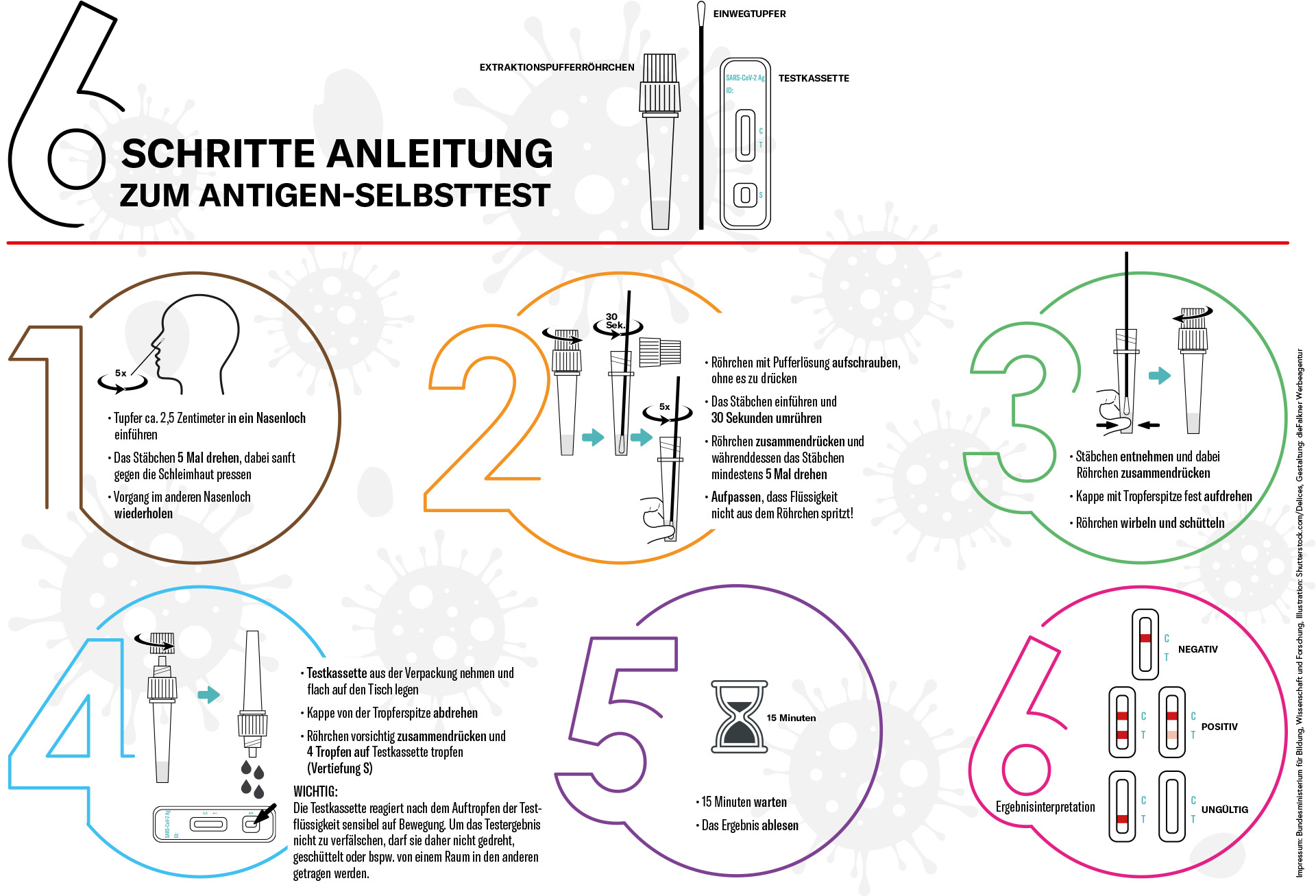
Wie bei jedem gesundheitlichen Test, ist Hygiene elementar wichtig. Wenn z.B. die Arbeitsfläche nicht hygienisch sauber ist, kann das Testergebnis verfälscht werden. Bevor losgelegt werden kann, erstmal gründlich die Hände waschen und ggf. desinfizieren. Die gängigsten Selbsttests sind die Nasen-Rachen-Abstrich-Tests. Bei diesem Abstrich ist es wichtig, dass das mitgelieferte Tupferstäbchen mit der Tupferspitze 4 Mal im vorderen Nasenbereich in jedem Nasenloch gedreht wird, um genug Sekret am Tupfer zu haben.
Die Arbeitsfläche sollte immer sauber sein und bevor man loslegt, wäscht man sich gründlich die Hände – unter anderem, weil man nach dem Rühren der Tupferspitze in der Pufferlösung einen Verschluss mit Ausguss auf das Röhrchen stecken muss. Fingerspitzengefühl und Vorsicht sollten logisch sein, denn der Tupfer wird ja zwei bis vier Zentimeter tief in das Nasenloch geschoben. Um Verletzungsgefahr vorzubeugen, sollte der Tupfer flach in Richtung Gehörgangsboden geschoben werden, niemals schräg nach oben! Wichtig ist auch, vorher NICHT die Nase zu schnauben / putzen, da dies einen negativen Effekt hat. Je blasser der Farbstreifen auf dem Test ist, desto weniger Sekret wurde aufgenommen, um getestet zu werden.
Impfung und falsche SARS-CoV-2 | Corona-Selbsttest Testergebnisse
Durch eine Impfung werden in den Körper zwar teilweise Eiweiße des Coronavirus in den Körper gebracht, diese bleiben aber in der Regel in der Nähe des Einstichs und den angrenzenden Muskelgewebe sowie Lymphen. Nur das SARS-CoV-2 Virus selbst kann in den oberen Atemwegen nachgewiesen werden, nach einer Ansteckung mit SARS-CoV-2. Da auch geimpfte Personen sich wieder anstecken können, ist ein Test ab und an keine schlechte Idee.
WICHTIG: Wer Tests kaufen möchte sollte auf durch das >> BfaRM << freigegebene zurückgreifen.
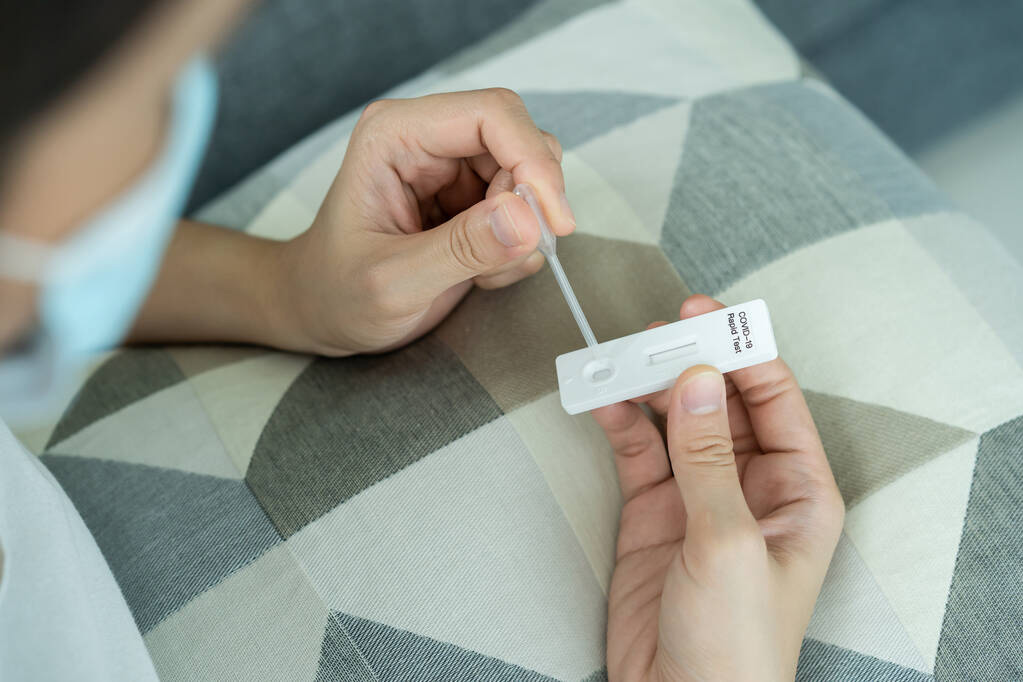
Asian young woman with hygiene protective face mask using SARS 2019-nCoV COVID-19 coronavirus antigen rapid test kit – ag test kit at home. COVID-19 antigen rapid test.